

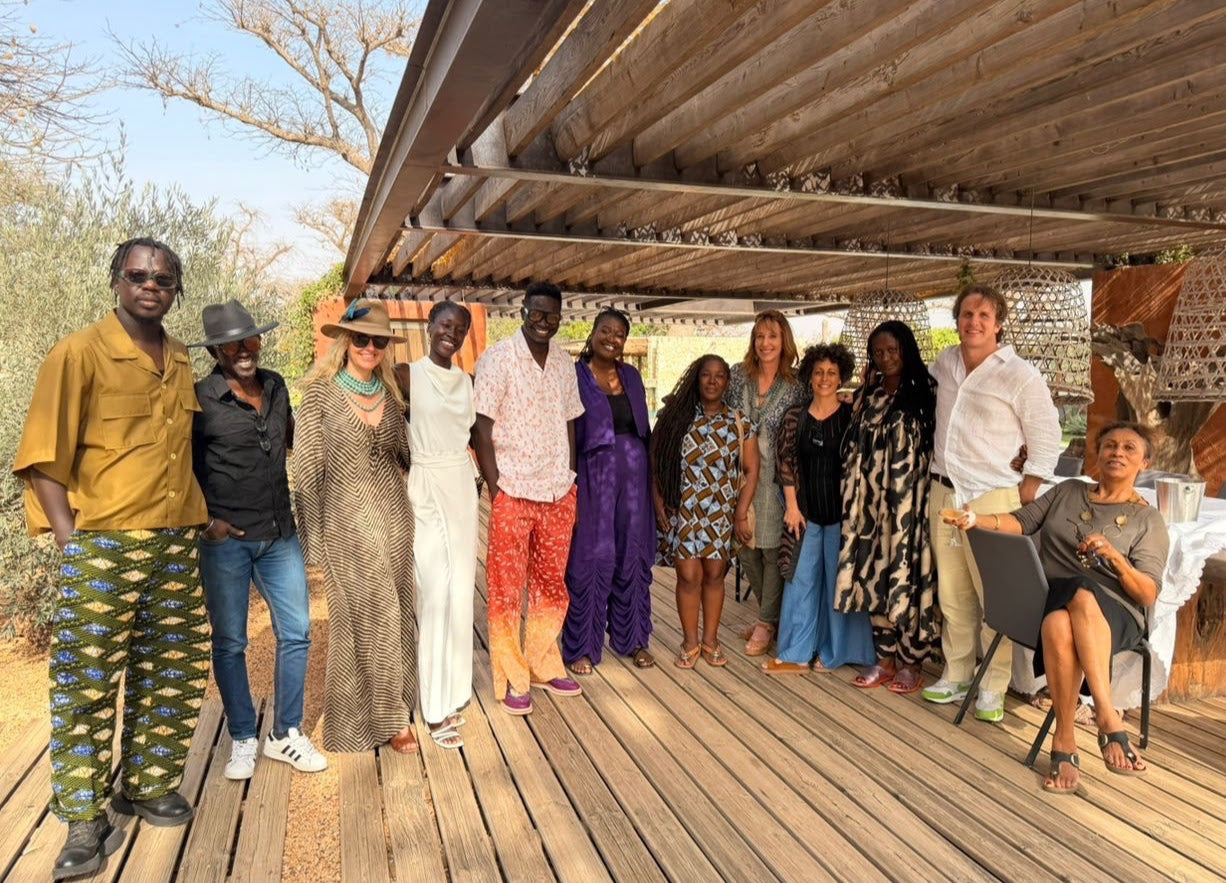
We went back to Dakar.
Partly to say thank you. Partly because some conversations from November needed a second chapter. And honestly, partly because we just wanted to be back in that room with those we meet and those we hadn't yet had the chance to
The world is getting weird. People are angrier, more anxious, less willing to sit with complexity. We feel it too.
Which is why Maputo matters. Not as an answer to any of that — but as proof that a different kind of room is possible. One where people actually listen. Where the sculptor and the soil scientist end up at the same dinner table and neither of them leaves unchanged.
June 2027. Mozambique. What Remains.
We can't wait.
 |
 |
 |
GALLERY FEATURE: MOZAMBIQUE
GALERIA KULUNGWANA
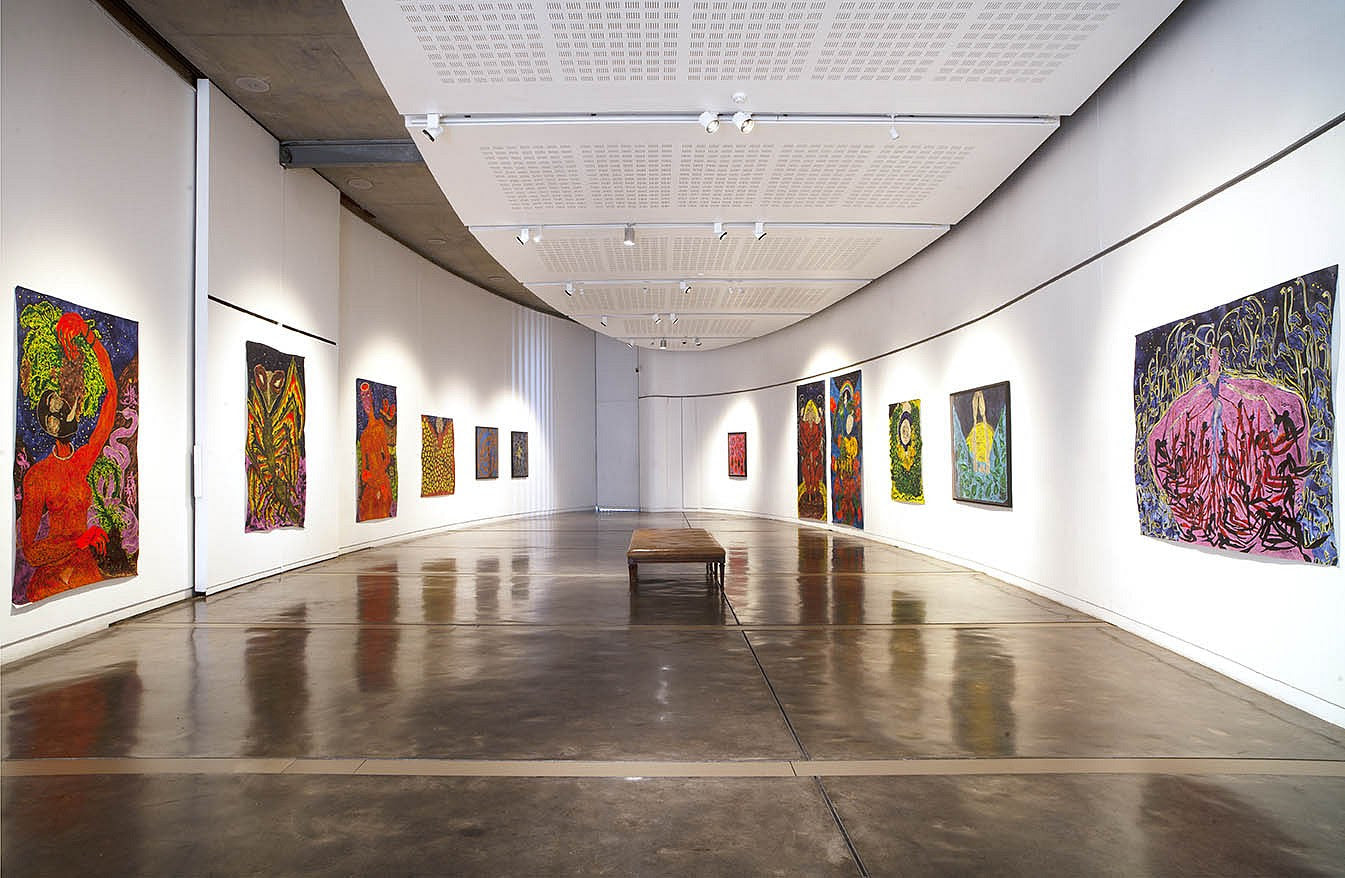
 If you find yourself in Maputo, walk to the end of Platform 5 of the Central Railway Station and look for the doors marked Sala de Espera. Behind them sits Galeria Kulungwana, one of the city's most important contemporary art spaces.
Founded in 2006 as the Kulungwana Association for Cultural Development, acting as a community of artists and a foundation to support art, artists and community projects across the country. The gallery occupies a corner of one of Maputo's landmark buildings. It is a home for painting, sculpture, ceramics, photography, digital art, book launches and live music. It has shown work by Filipe Branquinho, Mário Macilau and almost 100 artists shaping the contemporary Mozambican art scene.
We spent time at Galeria Kulungwana on our recent recce trip and came away with the same feeling we had walking through the rest of Maputo: that there is a confident, original creative scene here, building something on its own terms. We will be back, and we hope to bring some of you with us in 2027.
Find them at @galeriakulungwana on Instagram.

|
 |
Photos : © Enjoy Mozambique

|
ARTIST FOCUS BARTHÉLÉMY TOGUO Barthélémy Toguo was with us in Dakar last year, and we have been thinking about his work ever since. Born in Mbalmayo, Cameroon in 1967 and now based between Paris and Bandjoun, Toguo moves freely across watercolour, drawing, sculpture, photography, performance and installation. His practice returns, again and again, to questions of borders, migration, belonging, and the relationship between the human body and the natural world. |
Watercolour is a medium he has called "one you cannot cheat", and it shows: his large-scale washes of colour are at once intimate, political and unmistakably his own.
In 2008, he founded Bandjoun Station in his native Cameroon, a non-profit creative space that includes a gallery, library, artist residency and organic farm. The project, in his words, brings classic African art and global contemporary art "into the same space, without ghettoization or a hierarchy of values." That ambition is exactly the kind of work we are drawn to.
His work is held in the collections of MoMA, Tate Modern and the Centre Pompidou, among others. He is also one of the artists featured in the Afroprophetic book.
Follow him at @barthelemy_toguo.
 |
 |
 |
 |
Images : © Fondation Louis Vuitton, Tsukasa Ohtou and Kiyoshi Nishioka
WHERE WE FIND INSPIRATION
THE BIG COLLECTION
This month we want to point you toward The Big Collection, a South African initiative doing something quietly radical with children's art.
The premise is simple. The Big Collection treats paintings made by children as contemporary art, not as charity. The work is curated, exhibited, and sold on its own merits, and proceeds from each sale fund a soup kitchen run by mothers in the children's own community. Picasso once said it took him four years to paint like Raphael but a lifetime to paint like a child. This project takes him at his word, and in doing so creates something special.
Their 2025 collaborations speak for themselves, with partnerships at Zeitz MOCAA, Carte Blanche and Ebony Gallery in Cape Town.
We love this model. It is grassroots, led from within the community it serves, and refuses to treat children's creativity as anything less than it is.
Find out more at thebigcollection.art.
EVENT REVIEW
THE KITCHEN TABLE: A WORLD ON FIRE
 |
I'm a new paragraph block.On 27 March in Nairobi, we co-hosted a one-night dinner with The Collective Threads Initiative aptly titled A World on Fire: Food, Memory & Reflection, with chef Jakob Christensen at the stove. The premise was simple. Women (and a few honorary men) came together to have an evening of discussion around a kitchen table, meeting in that moment to find what connects us. |
Not a networking event but an open and honest discussion about a topic we care about: How do we break down barriers of history, language choice, geographic distance and social expectations to encourage a world in which young Kenyans have pride and connection to their natural heritage.
Each course came from a region shaped by a man-made environmental disaster. Boudin balls for New Orleans and the Deepwater Horizon spill. Gỏi cuốn for Vietnam, where Agent Orange still echoes through ecosystems and bodies. Mini deruny in the long shadow of Chernobyl. Palak patta chaat for Bhopal. Ceviche from the Amazon basin. Shorbat adas for Kuwait, after the Gulf War oil fires. Oodkac for Somalia's poisoned coast. Sabzi polo ba mahi for Iran. A Danish blåbær tærte for Bornholm and the Nord Stream methane leak.
Thank you to the Collective Threads Initiative for the partnership and one of the most thoughtful menus and evenings we have been part of.

Laisser un commentaire
Ce site est protégé par hCaptcha, et la Politique de confidentialité et les Conditions de service de hCaptcha s’appliquent.